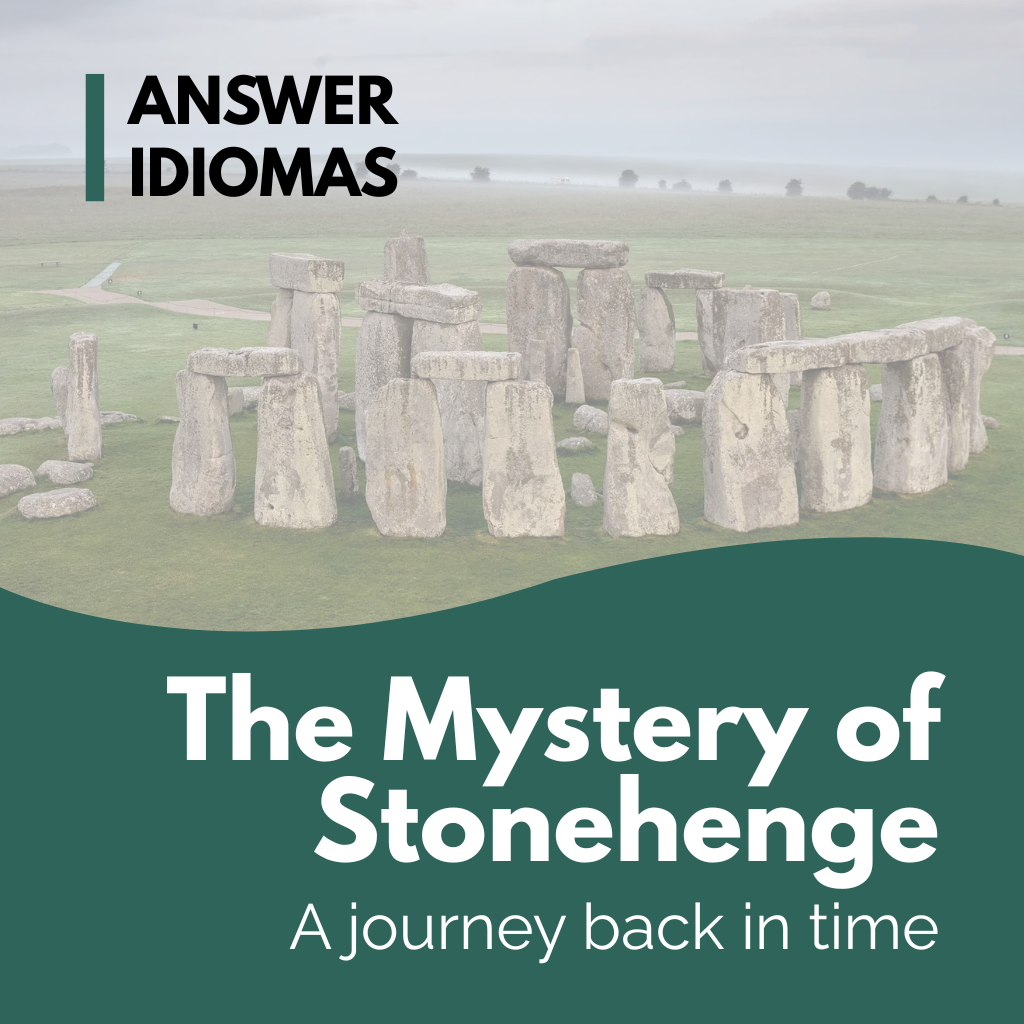
Stonehenge is perhaps the most iconic prehistoric monument in the world. Located on Salisbury Plain in Wiltshire, England, these massive standing stones have puzzled archaeologists, historians, and tourists for centuries. But what do we actually know about its history?
The Construction. A massive feat
The construction of Stonehenge was not a single event, but a project that took place in several stages. It began roughly 5,000 years ago as a simple earthwork enclosure where prehistoric people buried their cremated dead.However, the most impressive stage occurred around 2500 BC, when the large stones we see today were erected. These are divided into two main types:
- Sarsens: The larger sandstone blocks, which were brought from about 20 miles away.
- Bluestones: Smaller stones that, incredibly, originated from the Preseli Hills in Wales—over 150 miles (240 km) away! How Neolithic people transported them without modern machinery remains one of history’s greatest mysteries.
What was it used for?
Over the years, many theories have been proposed. Some people believed it was a temple built by Druids (Celtic priests), while others thought it was a place of healing. Today, most experts agree that Stonehenge served as a sophisticated solar calendar. The monument is perfectly aligned with the sun. During the Summer Solstice (the longest day of the year), the sun rises directly behind the "Heel Stone," shining into the heart of the circle. This suggests that the people who built it had an advanced understanding of astronomy.
Stonehenge today
Today, Stonehenge is a UNESCO World Heritage site and attracts more than a million visitors a year. While we may never fully understand the exact reasons why it was built, it stands as a powerful testament to the ingenuity and persistence of our ancestors. Whether it was a burial ground, a clock, or a place of worship, Stonehenge remains a symbol of British heritage that continues to capture our imagination.
Vocabulary for B2 Students:
- Feat: An achievement that requires great courage, skill, or strength.
- Roughly: Approximately.
- Erected: Built or put in a vertical position.
- Ingenuity: The quality of being clever, original, and inventive.
- Testament: Something that serves as a sign or evidence of a specified fact or event.
Stonehenge es mucho más que un conjunto de piedras antiguas; es un recordatorio de que el ingenio humano no tiene límites cuando se trata de entender el mundo. Hoy en día, este monumento sigue siendo un símbolo de la identidad británica y una parada obligatoria para cualquier estudiante de inglés que desee sumergirse en la historia del Reino Unido.
En Answer Idiomas, creemos que aprender una lengua es también descubrir los misterios de su cultura. Si quieres que este verano sea el momento en el que por fin entiendas la historia (y la gramática) sin barreras, nuestros intensivos son para ti. ¡No dejes que tu nivel de inglés se quede "anclado" en el pasado!